Central Park photographs well at almost every hour and in almost every season, but not every part of it is worth your time. This route starts on the Upper West Side, enters the park at 72nd Street, and moves south through five distinct locations before finishing at the Mall. On foot it takes about two hours. The visual range it covers is more than most people expect from a single afternoon in the park.
73rd Street: The Brownstones
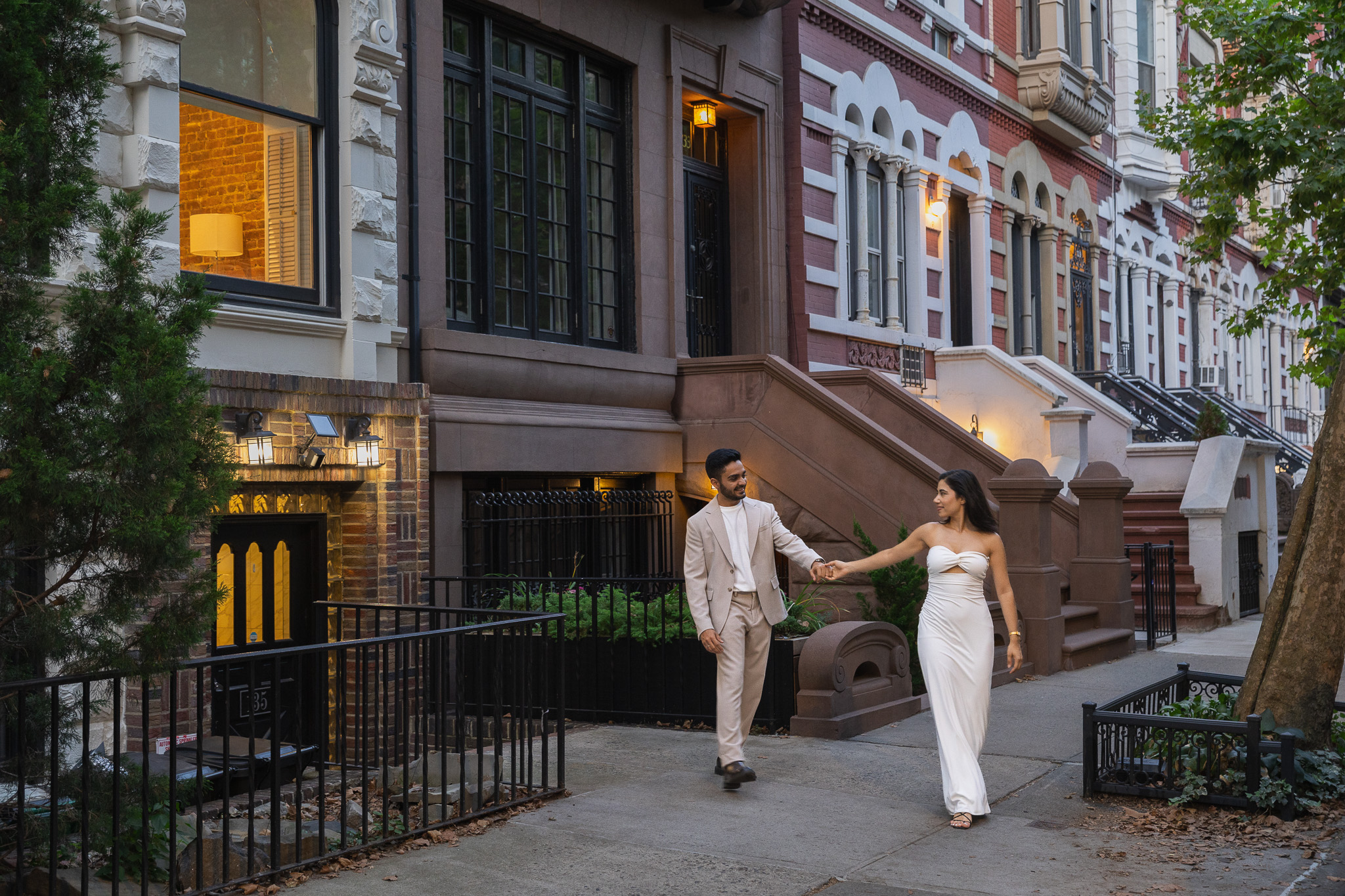
The walk starts before you reach the park. 73rd Street on the Upper West Side is a block of brownstones that looks the way New York is supposed to look: iron railings, worn stone stoops, facades where the texture is visible from across the street. When the light comes in low and at an angle, the stone does most of the work. The contrast between the dark recessed doorways and the pale building fronts is there for free. Spend a few minutes here before you move on. The quiet of a residential block is a good contrast to what comes next.
The 72nd Street Crossing
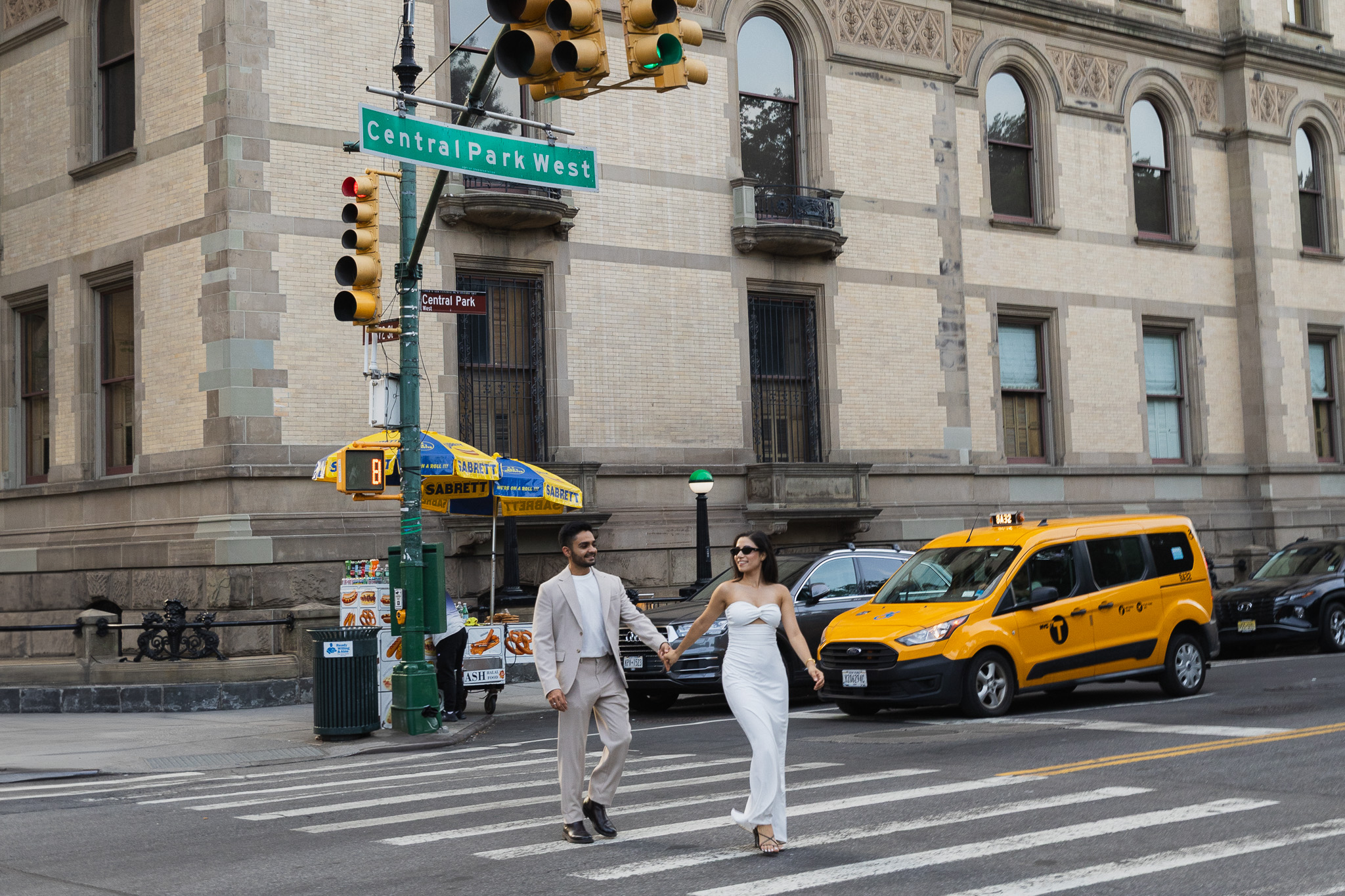
The entrance to Central Park at 72nd Street is framed by Central Park West and the old apartment buildings that line the avenue. The photograph to make here is the crossing itself: the road surface, a cab or two working through the background, the park beginning just past the edge of the frame. It is a picture about arrival more than destination. A few seconds of patience and the geometry usually arranges itself. The buildings behind give the frame the kind of depth that is hard to manufacture and easy to miss if you are in a hurry.
Cherry Hill Fountain
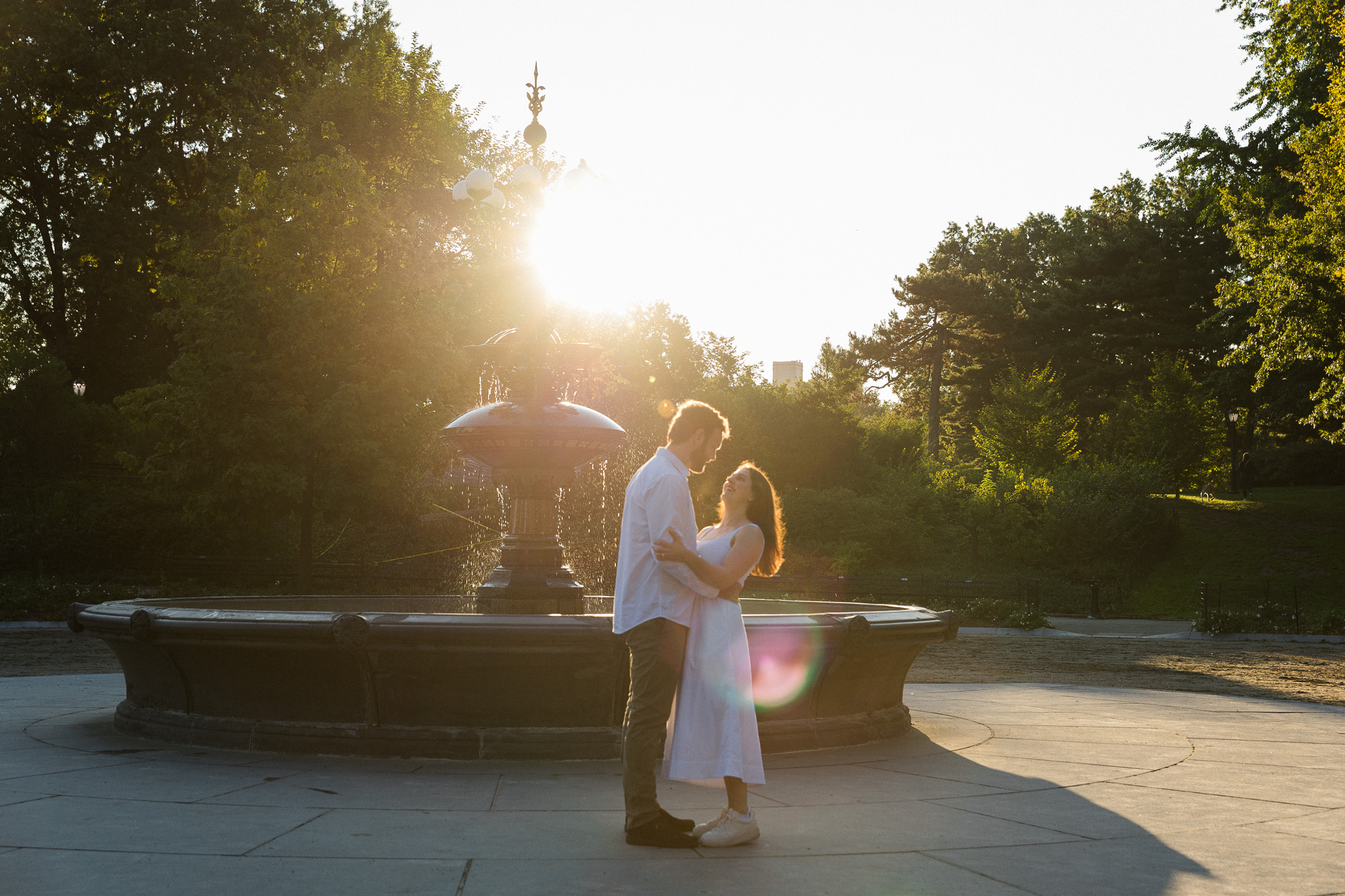
Cherry Hill Fountain is a five-minute walk from the 72nd Street entrance and gets a fraction of the attention that Bethesda does further south. The cast iron basin, the low fence around it, the way the water catches whatever light is available. In late afternoon the shadows on the stone are long and the treeline filters the sun. Early in the morning it is often empty. Either way it reads differently depending on when you arrive, which makes it one of the more reliable spots on the route: there is almost always something to work with here.
The Lawn
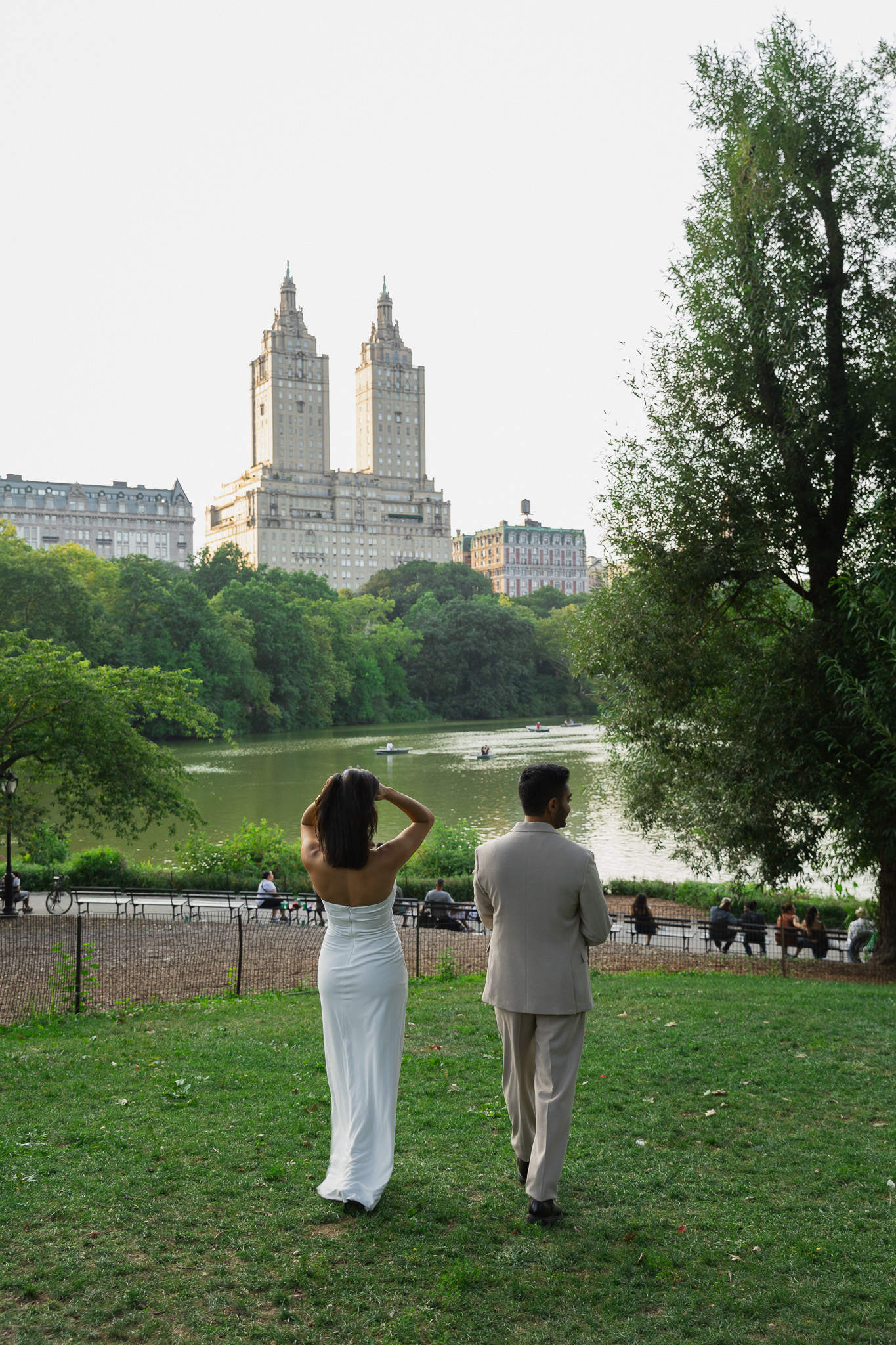
From the grass near Cherry Hill, looking back toward the Upper West Side, the towers of the San Remo rise above the treeline in a way that catches people off guard the first time they see it. Foreground grass, open sky, and the city unmistakably behind it. It is one of the park's best contradictions: the feeling of being somewhere removed from the street while the skyline is right there in the frame. The shot holds up in almost any light and in every season. In summer the trees fill in and the towers just clear the canopy. In winter they sit above bare branches with nothing in the way.
Bow Bridge
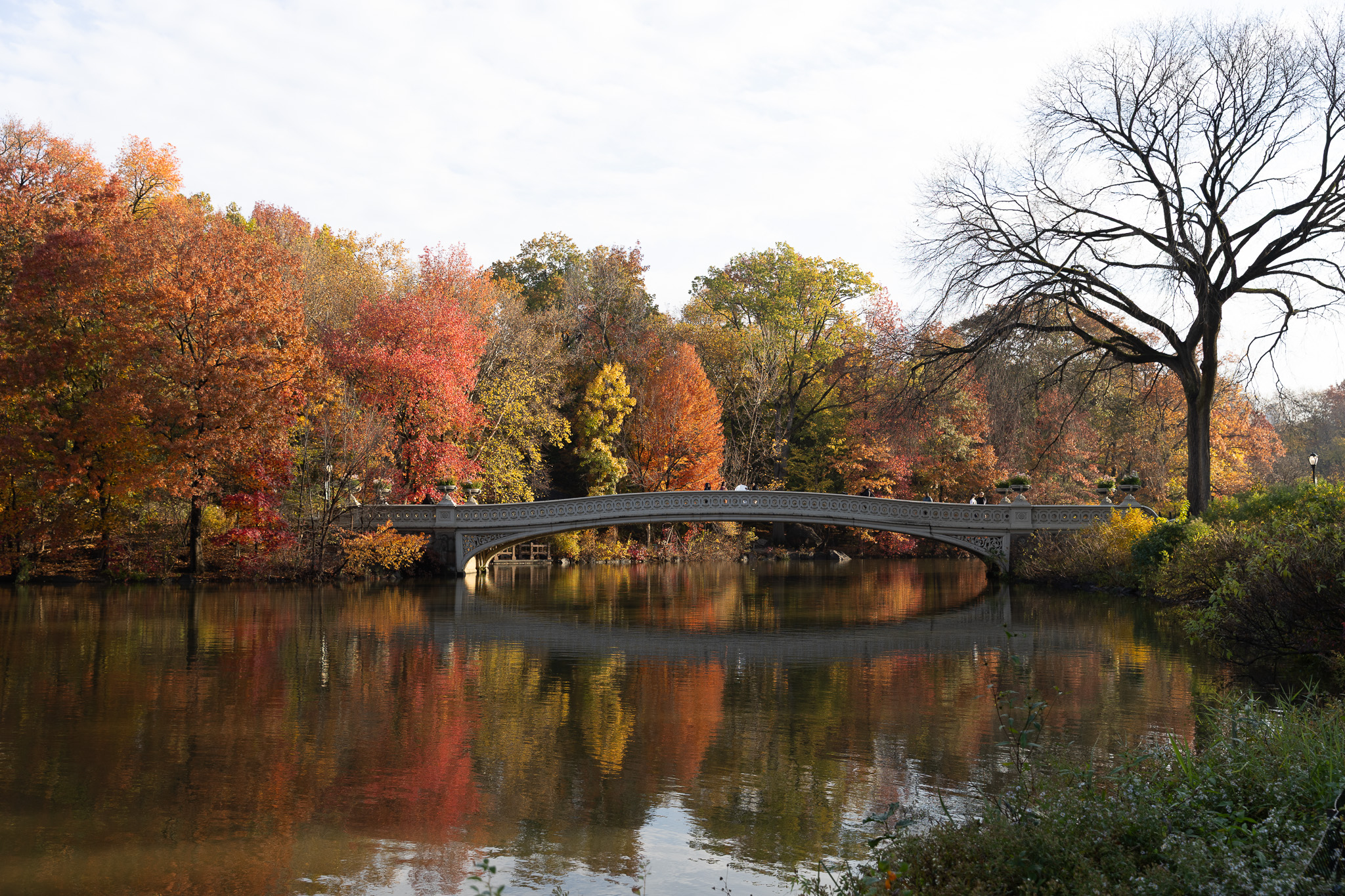
Bow Bridge is the most recognized structure in the park, and it photographs better from on the bridge than from the banks. Standing at the midpoint, looking east toward the Ramble, the city disappears entirely. Looking west, the San Remo comes back into the frame above the trees. The cast iron railing, the pale grey paint, the arch over the water: all of it is there to be used. Most people cross quickly. If you stop in the middle and take your time, the composition usually presents itself without much effort.
Bethesda Terrace
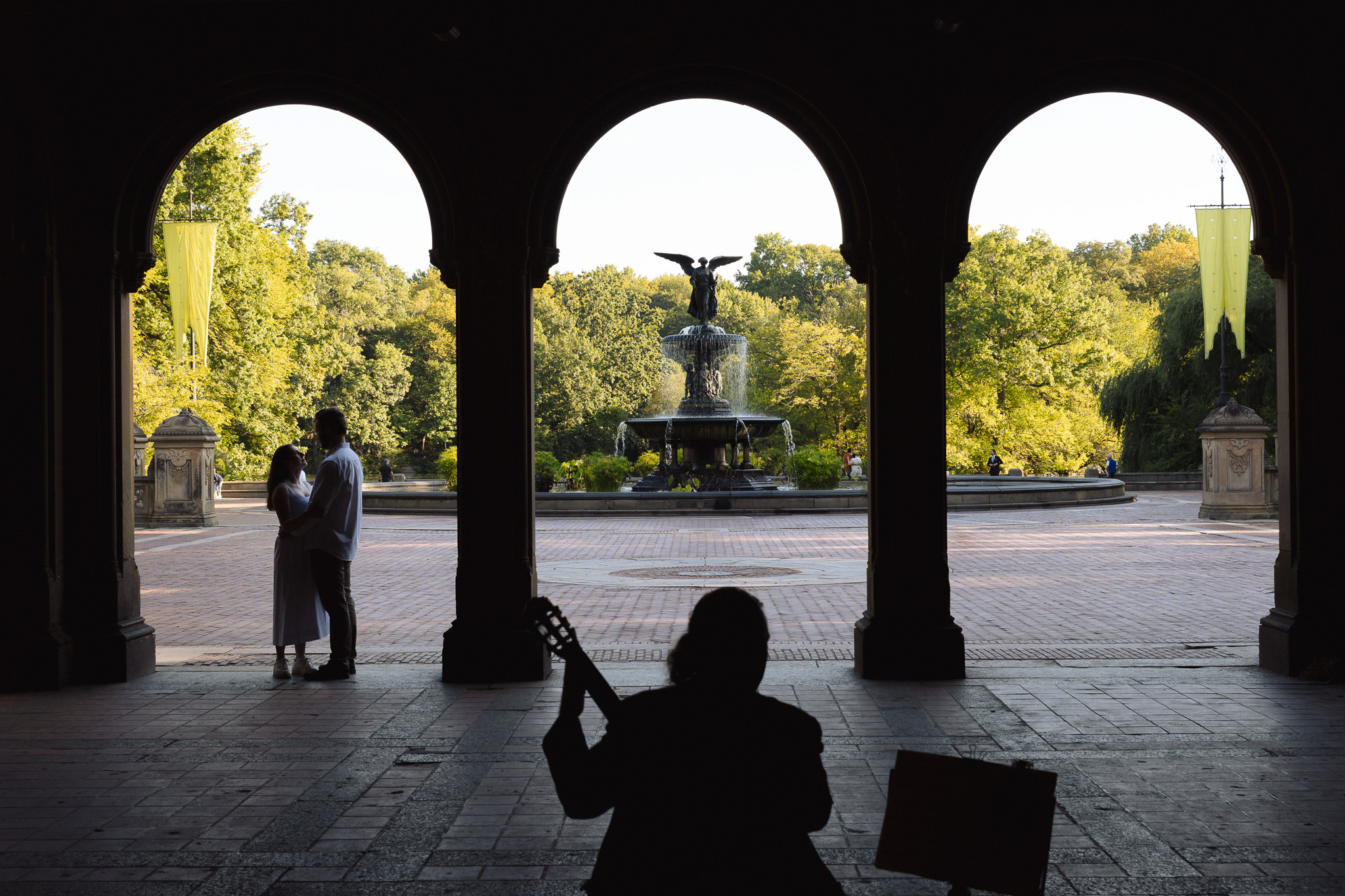
Bethesda Terrace is one of my favourite locations for couples sessions, and it has two parts that most people treat as one. There is the fountain plaza above, which draws crowds and has good sight lines down to the water and the Lake beyond. And there is the arcade below, a covered walkway with a Moorish tile ceiling that most visitors walk through without looking up. Both are worth your time. From the steps of the upper terrace, looking down toward the fountain, the people in the frame tend to contribute rather than distract. The scale of the space makes it easy to find a position where the crowds become part of the picture instead of a problem to work around.
The Mall
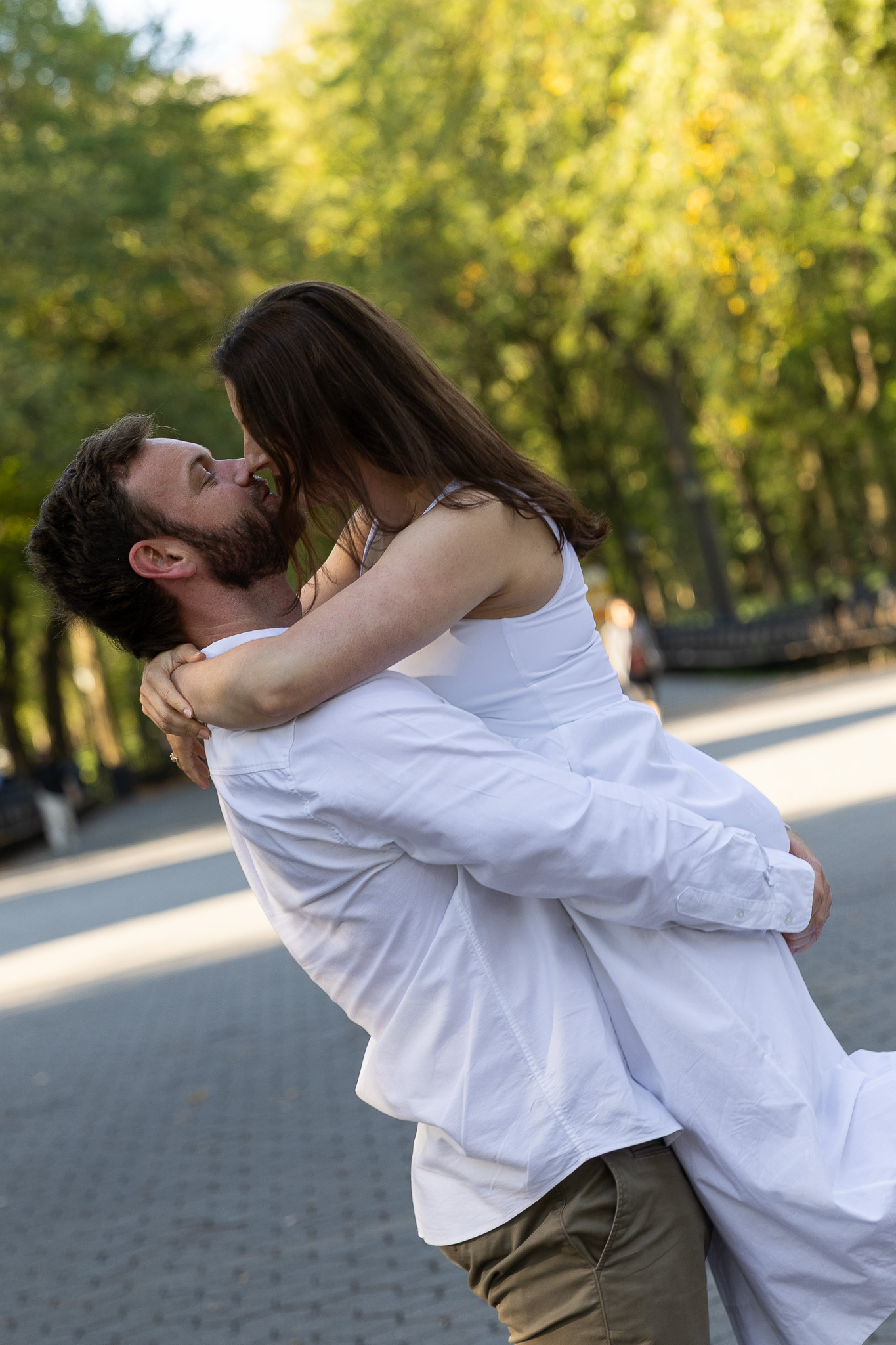
The Mall is the park's formal axis: a straight promenade lined with American elms that meet overhead and form a canopy the full length of the path. In warmer months the light through the leaves is green and diffused, and everything underneath it takes on a softness that is hard to replicate anywhere else in the city. In winter the bare branches open the frame up entirely and the architecture of the trees becomes the subject. The vanishing point of the path is the obvious starting point for any composition. Walk the whole length and take it slowly. The wider shot is the easy one; the details along the way are usually better.