Most couples who book a session tell me the same thing beforehand: I'm not photogenic, I never know what to do with my hands, I look awkward in every photo. It comes up so consistently that I now treat it as the default. The people who are naturally relaxed in front of a camera are the exception. The session going well has nothing to do with how photogenic you think you are. It has to do with how the two of you are directed through it, and that part is my job.
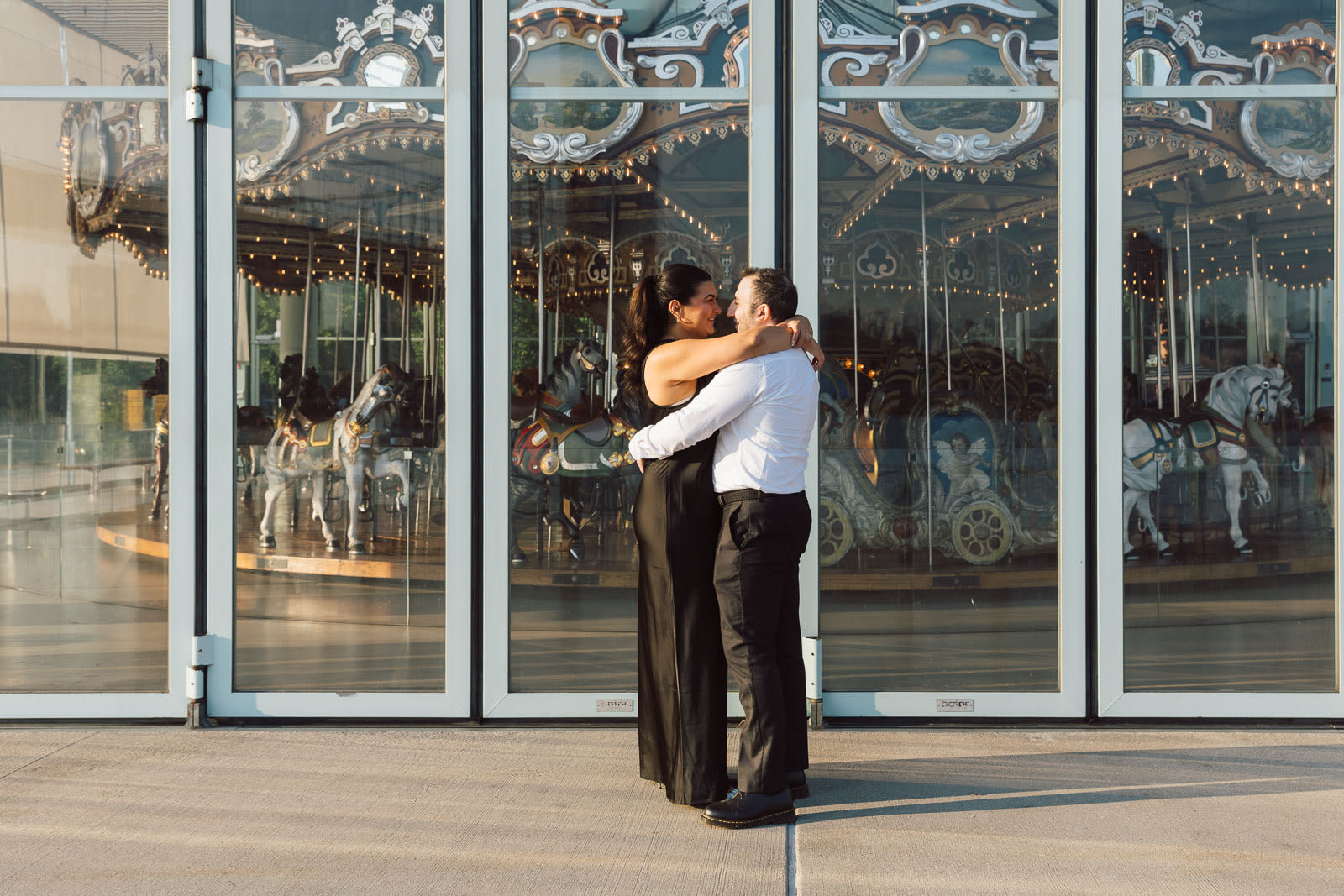
Move instead of pose
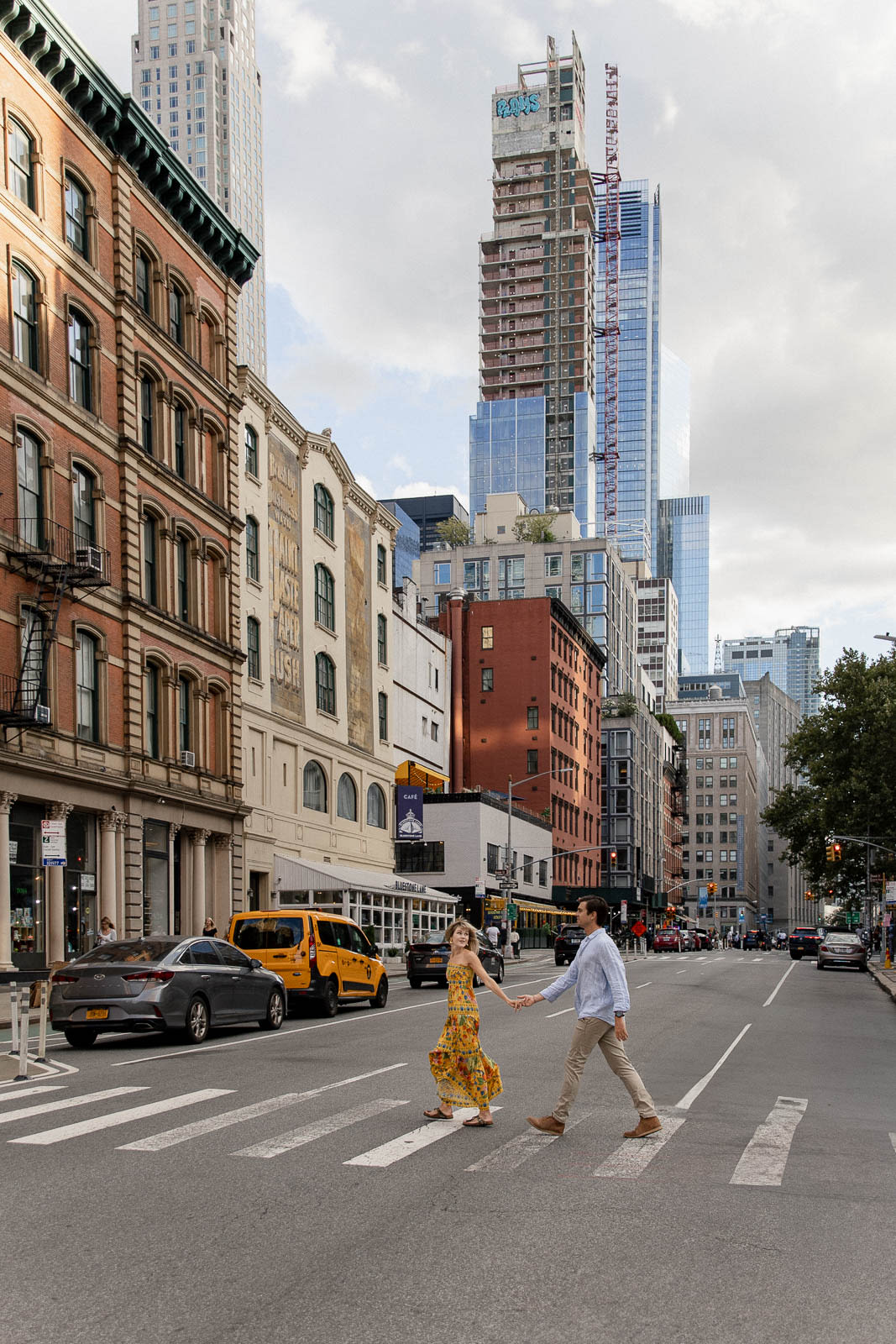
The word "pose" is part of the problem. Posing implies freezing into a position and holding it while someone photographs you, which is not how anyone's body naturally exists. When I shoot couples I give prompts that generate movement: walk toward me, keep going, turn around and head back. A walking shot is one of the most reliable ways to get a natural photograph because when you are paying attention to where you are going, you stop paying attention to your face. The best frames come from transitions. From the moment between one thing and the next, not the held position at the end of it.
This is why I rarely say "stand here and smile." Instead it might be: walk to that corner and don't look back. Or: you're late for something, go. It sounds odd but the results are consistently better than any version of standing still.
Talk to each other, not the camera
One of the simplest instructions I give during a session is to pretend I am not there. Tell them something. Ask where you want to eat after this. Argue about it. When couples talk to each other they stop performing for the lens and start being themselves, and that shift shows up directly in the photographs. Eye contact with the camera is useful for certain portraits, but the real images usually happen when neither of you is looking at me at all.
It does not matter what the conversation is about. A shared joke works. Whispering something works. Even a disagreement works, as long as it is a mild one. The content is irrelevant. What the camera picks up is the attention you are paying to each other, not the words.
What to do with your hands
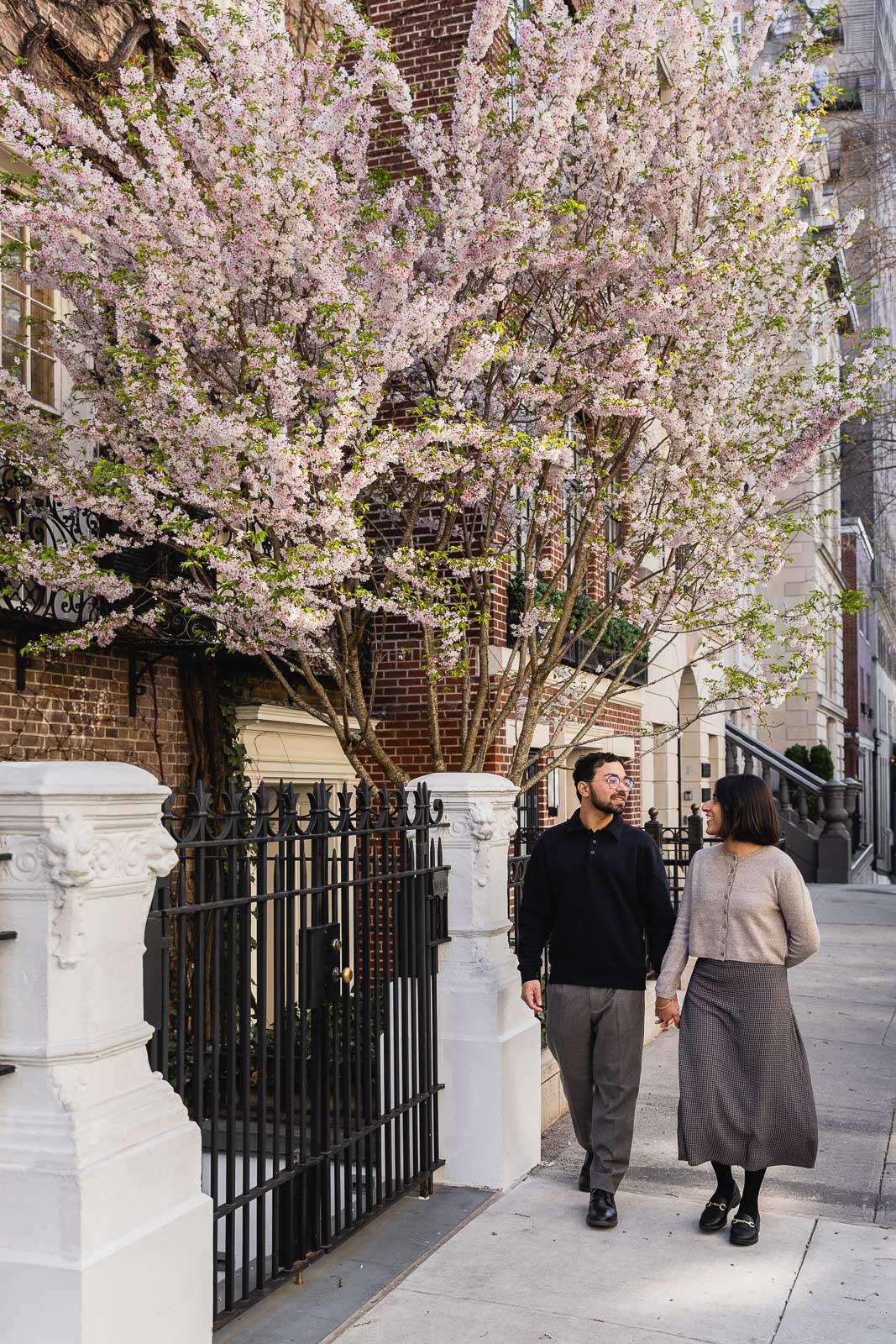
Hands are the thing people worry about most, and they matter least as long as they are doing something. Holding hands: fine. One hand in a pocket: fine. Arms around each other: fine. What does not work is hands hanging completely still at your sides while you wait for the next instruction. The easiest fix is to keep some contact with each other. Any contact. A hand on a shoulder, fingers interlaced, one of you adjusting the other's collar. Touch gives hands a purpose and that is all they need.
How I guide you through it
I do not put people in static positions and then wait for them to hold the pose. I talk throughout the session and give one direction at a time, keeping things moving so there is never a long pause where the two of you are standing still wondering what comes next. The prompts are activity-based rather than position-based: walk here, stop and look at that building, turn toward each other. Some of them produce good photographs. Some produce laughter, which also produces good photographs. A few produce nothing useful, and I move on.
The goal is to keep the pace up so you never have time to get self-conscious. A slower session with longer pauses is harder on couples than a faster one, even if it sounds more relaxed in theory.
The first ten minutes are the hardest
The beginning of any session is the least natural part, and I know this going in. The first ten or fifteen minutes are about walking around, getting used to having a camera nearby, talking. I am taking photographs during this time but I am not expecting the best work to come from it. The images I end up editing are usually from the middle and end of the session, once you have both stopped thinking about the camera. By the time you have forgotten it is there, the photographs are already made.
So if the first few minutes feel stiff: that is normal, and it passes. You do not need to fix it. I will keep moving until it resolves itself, and it always does.
What actually matters
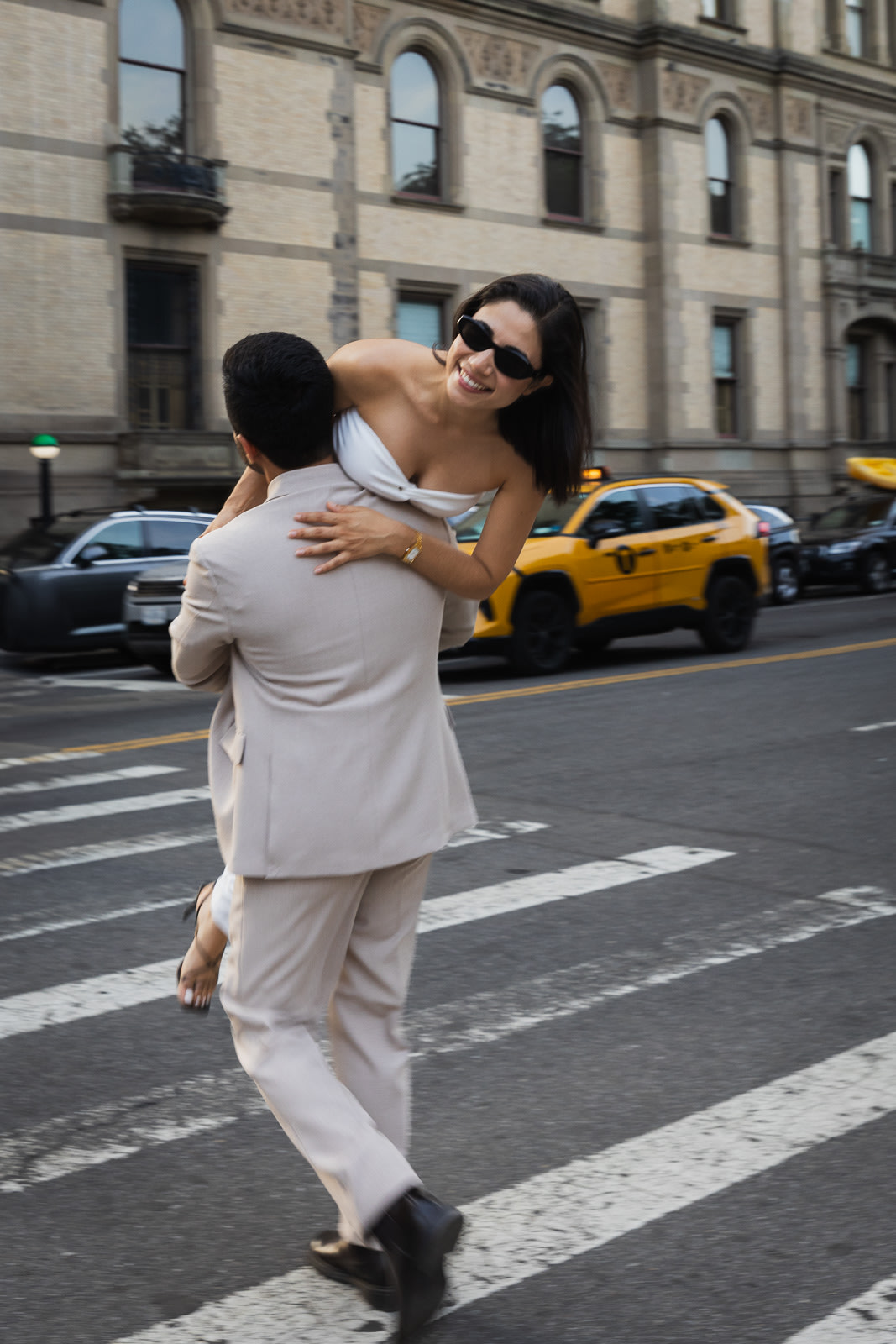
You do not need to be confident in front of a camera. You need to be present with each other. Show up, stay close, and let the session move. The camera follows from there. If you're still working out what to wear on the day, the couples outfit guide covers that side of things.